 Left – Rosie Connelly. Cover – Patrick Richards. Photos – Olivia Martin-McGuire
It's a laudable way to start the ATYP year. The Voices Project, 2013, promotes the emerging fortunes of writers from the Fresh Ink programme. Directed by Paige Rattray, it's called Out of Place. Ten new voices. Actually twenty, when one considers the actors involved; also fresh faces. Out of Place is a loose theme, designed to string together ten pearls. Ten? Well, we'll get to them in a moment. Rattray has done something clever, expedient and satisfying, in deciding to stage all the monologues (for all these mini-me plays take that form) in the one setting. It's a construction site. In fact, sitting in the front row, our feet were planted in sand. Not pristine beach sand, but the stale, impure kind one encounters in such contexts. There was a large skip angled at the back of the space and a general sense of detritus and impermanency. Like the lives of the young characters portrayed, this lends a palpable sense of transience, anxiety and apprehension. It's a dark, unsafe environment. Hormones are everywhere. Props are few and populate the space only occasionally; the rest is down to sound, light, choreography and drama.
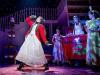
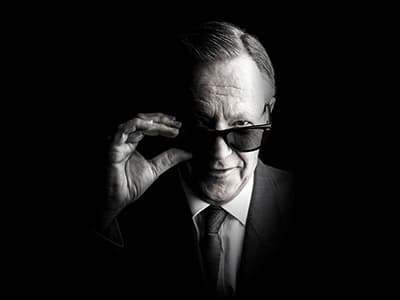
These Things Happen is by Joel Perlgut, a student at UTS who, even at high school, distinguished himself as a writer. He's lucky to have recruited Patrick Richards who, at seven, apparently, determined he wanted to be Tom Cruise. Well, he's grown up, even if Tom hasn't and, while TC may unwittingly look like a clown, at times, Richards very deliberately does, in this piece, springing out of the skip like a jack-in-the-box, replete with red nose, curly wig, big shoes; the whole enchilada. The freakish accoutrement that characterises the clown, of course, makes for a transparent metaphor, should you tend to read the piece that way, as I have. When your face is like the lunar surface (thanks to acne), your hair is greasy, unruly and dandruffed, you're sprouting hair, here, there and everywhere, but not enough to shave, when you're afflicted by sweating and palpitations every time you see a pretty girl, you feel as awkward and obvious as a circus performer, only not as well-liked. People may laugh sympathetically with a clown, but you're sure they're laughing at you. Or, perhaps it's just about being a professional clown in a world full of economic rationalists. Either way, the idea is clear and simple, the script is strong and the performance, excellent.
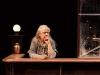
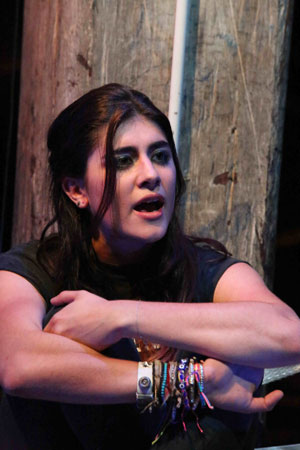
Sara West's Falling Through The Blue/Grey is a little more challenging; for a couple of reasons. Firstly, it doesn't have the disarming clarity or linearity of Perlgut's work; it's not as accessible and, therefore, not as relatable, though it does manage a vivid bleakness that seems to be centred around a return to a former industrial, now ghost, town. Secondly, Rosie Connolly's performance is hampered, in a sense, by naturalism, which I'd otherwise regard as an asset. In colouring her character with vernacular accuracy, her diction is marred by talking too fast and with that particular affected inflection those of us who associate reasonably often with young people know so well. What might've been a trump card in cloaking herself in the role thus backfires and becomes a distraction. I wouldn't for a moment suggest the baby be thrown out with the bathwater and a declamatory posture be adopted, but surely there must be some kind of happy midpoint. Frankly, it makes me wonder whether anyone's really teaching voice effectively anymore, including at our flagship acting schools. Still, Connolly's physical disposition gave a convincing sense of Waiting For Godot limbo, as she leaned, awkwardly, against a beam, lurking in shadow. Her discomfort rendered her, tangibly, out of her element and, hence, out of place.
Red Panda is by Amanda Yeo and is performed by Angela Tran. Both show promise. Again, the script isn't entirely cohesive. It's a little rambling and undisciplined. Free range, you might say. It does have something to say about stereotypes and the kind of patronising toleration, anxious political correctness and eager curiosity that sometimes passes for genuine multiculturalism and understanding. Along the way, it's also a chilling reminder of some of the trials and tribulations faced, apparently still, by high schoolers. Yeo paints off-stage characters colourfully and believably, while Tran's performance reflects her promise. More confidence, mastery and experience will stand her in good stead.
Izzy Roberts-Orr's Peach is as much performance poetry as anything else. it has an arresting cadence that Georgia Brindley, in performing it, makes the most of, as her character thinks aloud, between sinking her teeth into a(n imaginary) sumptuously ripe peach and rolling her own. It's a kind of streetwise soliloquy. One can almost detect the prodigious stench of the fish market she's loitering at. The delicate, pink scent of stone fruit, heady smell of tobacco and offensive twang of stale seafood become analogous for the spectrum of life experience. And Roberts-Orr throws in other pungent cues, like cinnamon. And piss. Even love and lust reeks. I want your smokes, your champion ruby cigarettes; scattered packets on our coffee table; smell of damp and paper and your socks. She stopped trying to clean your room. I want to breathe in that smoke; breathe you in that smoke.
Karim Zreika is only fifteen, but already has a presence and charisma that, once accompanied by training, is bound to see him often in our faces, on stage and screen. He is the featured performer of Arda Barut's The Market Brolosopher, casting him as a fast-talking hustler of goods of uncertain origin. His character is doing what he needs to do to survive. Hey! Don't be a sook! Come have a look! He opines, at length, to his silent mate, the vagaries of life at the commercial coalface of the market. He also betrays his prejudice and the reality of an ethnic pecking-order and rivalry, as he mocks Vietnamese gangspeak. It's keenly observed, has the hallmarks of gritty, everyday reality, but doesn't really go anywhere. There's no particular arc. It's just a slice of life. Unfortunately, though, Zreika's twinkle-eyed, twinkle-toed magnetism isn't matched by his diction and lines are often strangled. And Sean Marshall looks most ill-at-ease, as his sounding-board.
This Feral Life was written by Julia Rose Lewis and performed by Lucy Coleman. Now we're talking. A uniformed schoolgirl is hanging out in a cemetery as you do. Rattray has ingeniously conscripted the rest of the cast to lie symmetrically prostrate, so as to resemble graves. Always wag down here; noone looks in the graveyard. From her first line, Coleman epitomises the devil-may-care disposition of a sharp-tongued teenager. Mia no longer has her father in her life, a trauma she's dealing with in her own way: nonchalance. So, when her careers advisor plays psychologist, she loses it. And she takes umbrage at the predictably chauvinistic vocational suggestions put to her. Teacher. Nurse. She wants to be a photographer. (Lewis and Coleman are veritable photographers too: this is a potent snapshot.) 'Photography isn't a stable career'. But Mia isn't looking for stability. It's mobility she daydreams about. I’m not planning on working weekend shifts at Hungry Jack’s for the rest of eternity, like some of those moles will. Never get out. I’m not gonna make manager, buy a fucking restaurant, become a fat lard who’s been flipping patties for forty years and has never seen the world. Nah, I’ll get out. I work drive-through. That's a big deal you know. Only the chicks who take smoke breaks with Ted, our boss, get asked to do drive-through. So I started. Smoking, I mean. It worked. Stole the durries from dad. Winny Reds. 16 mils. Fuck me. Nearly died. Watched the way you held the cigarette in your mouth. Inhale; say something. Hold it in. Exhale. I. Was. A. Natural. Both Lewis' script and Coleman's delivery are just that. This was and is a standout.
The writer-performer nexus for Sunrise Set is Krystal Sweedman and Charlotte Tilelli. There's someone lying in bed, towards the back of the space, complete motionless, facing away from us. A young woman is present, with her notebook computer. She begins talking, incessantly, to the person we learn is her grandmother. It seems it's just a little too late to make her proud. Sarah Betts, country singer (we gather), has a YouTube vilm she's keen to show her gran. But she's hampered by buffering. Eventually, technology complies and she's able to show gratitude, in the form of success, to the woman who's encouraged her all along. She barely contains her grief as she sings one last song to her nanna. It's a gentle meditation on loss that seems very personal. Tilelli is impressive.
Christopher Harley wrote Birdcage and Sean Marshall performs. Given his awkwardness and apparent discomfort as support in The Market Brolosopher, I was heartened by the strength of his part here. In a way, Marshall's character is the male counterpart of the girl in the graveyard. He's trying to come to terms with his father's departure and now his brother, on whom he clearly relies, is heading overseas within hours. Will he ever return? Marshall's character has had a run-in with the cops. He lost it with the frail, old woman who now lives in the house that used to be his home. He smashed her birdcage. The bird had already flown the coop, seeking its freedom; much as his dad had. Of course, the woman has been left bereft; much as he is. Everyone's flying away from him. His sense of equilibrium has escaped too. Marshall has good material to work with and he milks it.
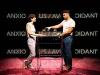
Randa Sayed, wearing her writer's hat, teams with Mia Morrissey for Private Research. Marwer's a 'good girl', but she's been Googling penises. Curiosity has gotten the better of her. After all, she's never seen one. On or offline. Just as The Market Bro' feared his father discovering his detention by the boys in blue, Marwer must appeal to Zoe (Tilelli) to keep her secret safe, lest, by Chinese whispers, her father get wind of her, well, private research. Or research on privates. Morrissey, too, is persuasive in the role, which zeroes in on a subcultural reality to which many will, I think relate, all too anxiously. Mind you, no one group has the exclusive franchise on sexual privation, misinformation, or ignorance.
Finally, Tom Mesker's The Mangroves, featuring Claudia Osborne, opens with an excerpt from Lewis Carroll's Jabberwocky. Osborne's character, Alison, is lampooning her teacher. It's easy to do. Miss sits there, reciting to the class like she’s about to climax. Each word drawn out like a moan. Any wetter and she’ll slide off her seat. 'Alison Brennan, did you just put your gum under the desk?' Great. And no bitch I put it up my ass. 'You can stay back and clean that off!' The entire script is so suggestive of the central sociopolitical power struggle of school it's chilling. The whole environment is recreated with similarly frightening fidelity. The bathrooms have a cloud of smoke hanging above them. I wash my hands, after getting hard, crusty gum off that desk and examine the ink all up these sickeningly pastel walls. Kelly Grodden’s a mank ass cunt. It's not pretty. But it's pretty realistic. And a near-to-ideal marriage between writer and actor.
As you will have gathered, not all this work is completely hitting the mark. But enough is to more than justify the initiative and commend it as an ongoing, year-in, year-out highlight of ATYP's programme. Plaudits, also, to designer (and fourth generation scenographer) Lauren O'Flaherty and lighting man, Ross Graham. These monologues wouldn't have been half as compelling without their contributions. They provided the string, for the pearls.
atyp presents
Out of Place
part of The Voices Project
Directed by Paige Rattray
Venue: atyp Studio Theatre, Hickson Rd, Walsh Bay
Dates: 30 Jan – 16 February 2013
Times: Wed-‐Sat 7pm, Sun 5pm, Wed and Fri 11.30am
Tickets: $15 – $25
Duration: 100 mins (no interval)
Bookings: atyp.com.au